
Oasis Family Dentistry & Orthodontics offers Phase 1 early orthodontic treatment, palate expanders, and space maintainers for children ages 7–10 in Gilbert, Arizona, under the care of board-certified orthodontist Dr. Shana Vohra. Phase 1 treatment addresses developing bite and jaw problems while a child's bones are still growing — a window when guided intervention can prevent more complex treatment later. Palate expanders widen the upper jaw to create room for permanent teeth and correct narrow arches. Space maintainers hold space for permanent teeth when a baby tooth is lost early. At Oasis, we use metal sintered expanders, which are more comfortable for patients to place than traditional expanders and don't require a separate separators appointment. Free consultations are available for children of all ages.
What Is Phase 1 Orthodontic Treatment?
Phase 1 orthodontics — also called early interceptive treatment — is a targeted course of treatment for children typically between ages 7 and 10, while the jaw is still actively developing. The goal isn't to fully straighten the teeth at this stage. It's to correct underlying structural problems — jaw width, bite alignment, harmful oral habits — that, if left untreated, become significantly harder and more expensive to address once growth is complete.
Not every child needs Phase 1 treatment. Many kids are simply monitored at regular intervals until they're ready for full braces or aligners (Phase 2). But for the children who do need it, early treatment can make a meaningful difference in outcomes.
The American Association of Orthodontists recommends that every child have an orthodontic evaluation by age 7 — early enough to identify developing issues, but not so early that growth patterns can't yet be assessed. At Oasis, Dr. Vohra offers free consultations for children so parents can get a clear, honest picture of whether intervention is needed.
What Problems Does Phase 1 Treatment Address?
Phase 1 is most beneficial for children who have:
- Narrow upper jaw or crowded teeth — not enough space for permanent teeth to come in properly
- Crossbite — upper teeth sitting inside the lower teeth, which can cause jaw shifting and asymmetric growth
- Severe overbite or underbite — significant bite discrepancies that are easier to correct while the jaw is still growing
- Prolonged thumb sucking or tongue thrusting — oral habits that can reshape the jaw and push teeth out of alignment
- Severely crowded permanent teeth — creating space now can eliminate or reduce the need for tooth extractions later
- Early or late loss of baby teeth — which can disrupt the spacing needed for permanent teeth
What Is a Palate Expander?
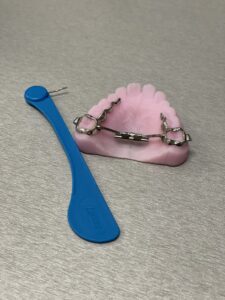
A palate expander — also called a maxillary expander or rapid palatal expander (RPE) — is a custom-fitted appliance that attaches to the upper back teeth and gently widens the upper jaw over time. It works by applying light, consistent pressure to the two halves of the palate, which in children are not yet fully fused. This stimulates new bone growth in the gap, gradually widening the arch.
Expansion is a gradual process. Parents activate the expander at home using a small key to turn a central screw, typically once per day for a prescribed period. Most active expansion phases last 1–2 months, followed by a retention period of approximately 6 months where the expander stays in place while bone solidifies.
At Oasis, we use metal sintered expanders. Unlike traditional expanders, sintered expanders are more comfortable for patients to place themselves and do not require a separate separators appointment before fitting — meaning one less visit and a smoother experience for your child from the start.
What Are Space Maintainers?
When a child loses a baby tooth earlier than expected — whether from decay, injury, or extraction — the surrounding teeth can drift into the empty space. This can block or crowd the permanent tooth trying to come in underneath, leading to misalignment that requires more complex orthodontic treatment later.
A space maintainer is a small, custom-fitted appliance that holds the gap open after an early tooth loss, preserving the space for the permanent tooth to erupt in the correct position. It's one of the simplest and most cost-effective early interventions available — a straightforward way to prevent a bigger problem down the road.
Space maintainers are most commonly used when a back baby tooth (molar) is lost early, as these teeth hold significant space for the permanent premolars coming in behind them. Not every early tooth loss requires a space maintainer — the need depends on the child's age, which tooth was lost, and how soon the permanent tooth is expected to come in. Dr. Vohra will evaluate whether one is recommended at your child's consultation.
Space maintainers at Oasis are fixed — cemented onto adjacent teeth and staying in place until the permanent tooth erupts. They require no action from the child, are checked at regular appointments, and are removed once the permanent tooth comes in.

Phase 1 vs. Waiting for Phase 2 — How Do We Decide?
This is the most common question parents ask, and it's a fair one. Phase 1 treatment is an investment of time and money, and it isn't necessary for every child.
Dr. Vohra recommends Phase 1 when:
- A structural problem (jaw width, crossbite, severe bite discrepancy) will be harder or impossible to correct non-surgically once growth is complete
- A harmful habit is actively reshaping the jaw and needs to be addressed now
- Early tooth loss has created a spacing problem that will worsen without intervention
- Early intervention meaningfully reduces the complexity or duration of Phase 2 treatment
She does not recommend Phase 1 simply because teeth look crooked. Mild crowding and misalignment in a growing child often self-corrects as permanent teeth come in, and treating it early doesn't necessarily improve the final outcome.
The goal at Oasis is to give parents an honest assessment — not to recommend treatment that isn't necessary.
How Much Does Phase 1 Treatment Cost in Gilbert, AZ?
Phase 1 treatment costs vary depending on what's involved. A space maintainer alone is typically the smallest investment; an expander or partial braces case will be more. Dr. Vohra will give you a detailed cost breakdown at the consultation before any treatment begins.
Insurance: Many PPO dental insurance plans include an orthodontic lifetime benefit that can be applied to Phase 1 treatment. Benefits commonly range from $1,000–$2,500, though coverage varies by plan and some patients receive more. If the benefit is partially used during Phase 1, the remaining amount typically applies to Phase 2. We verify your child's specific benefits before treatment begins.
Financing: We offer interest-free in-house payment plans, as well as extended financing through CareCredit, HFD, and Cherry.
Frequently Asked Questions
At what age should my child see an orthodontist?
The American Association of Orthodontists recommends a first evaluation at age 7. At this age, Dr. Vohra can identify jaw and bite issues that benefit from early treatment, while most children still have enough growth remaining for intervention to be effective. Most children don't need Phase 1 treatment, but the evaluation itself is important.
How do I know if my child needs Phase 1 treatment or can wait?
The clearest indicators for Phase 1 are structural — a narrow jaw, crossbite, or significant bite discrepancy. Simple crowding or crooked teeth alone usually don't require early treatment. Dr. Vohra will give you a clear recommendation at the consultation, including what the likely outcome is if you choose to wait.
My child lost a baby tooth early. Do they need a space maintainer?
Not necessarily - it depends on which tooth was lost, your child's age, and how close the permanent tooth is to erupting. Back baby teeth (molars) that are lost early are more likely to need a maintainer than front teeth. Dr. Vohra will take an X-ray to assess the situation and give you a direct recommendation.
How long does a space maintainer stay in?
A fixed space maintainer stays in place until the permanent tooth erupts into the space, at which point it's removed at a routine appointment. The timeline varies depending on the child's age and how far the permanent tooth has developed — it could be months or a couple of years. Regular checkups allow Dr. Vohra to monitor progress and remove it at the right time.
Does a palate expander hurt?
Most children experience mild pressure or discomfort for a day or two after the expander is activated, which quickly passes. The sintered expanders we use at Oasis are designed to be comfortable to place, and most kids adjust within the first week. Soreness is manageable with over-the-counter pain relievers if needed.
How does my child activate the expander at home?
Dr. Vohra will show both you and your child exactly how to use the small activation key before you leave the office. It's a simple, quick process — one small turn per day, typically at bedtime. We provide clear written instructions and are always available to answer questions.
Does my child need to come back to the office more often with an expander?
During active expansion, we typically see patients every 4–6 weeks to monitor progress. Once expansion is complete and the expander moves into the retention phase, visits become less frequent. Overall it's a manageable appointment schedule for most families.
Will my child need braces after Phase 1?
Most children who complete Phase 1 treatment still go on to Phase 2 (full braces or aligners) once their permanent teeth have come in, usually around ages 11–13. Phase 1 doesn't eliminate the need for Phase 2 in most cases — but it can shorten treatment time, reduce complexity, and in some cases eliminate the need for tooth extractions or jaw surgery later.
Can Phase 1 treatment affect my child's speech?
A new expander may cause a temporary lisp or change in speech for the first week or two as your child's tongue adjusts. This is completely normal and resolves on its own. Most kids adapt quickly.
Does the expander affect eating?
For the first few days, softer foods are more comfortable. Hard, sticky, or chewy foods should be avoided throughout expander treatment as they can dislodge or damage the appliance. Dr. Vohra will give you a specific food list at the fitting appointment.